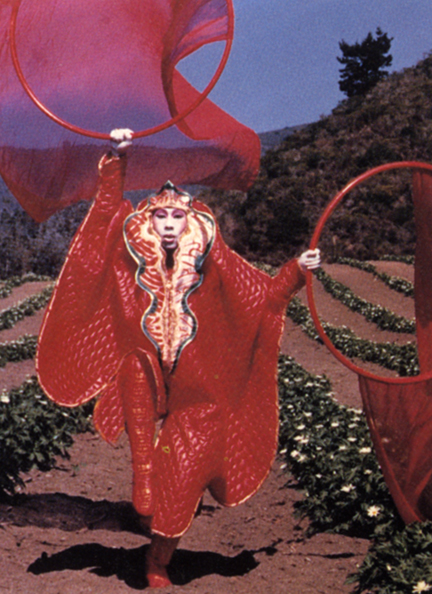
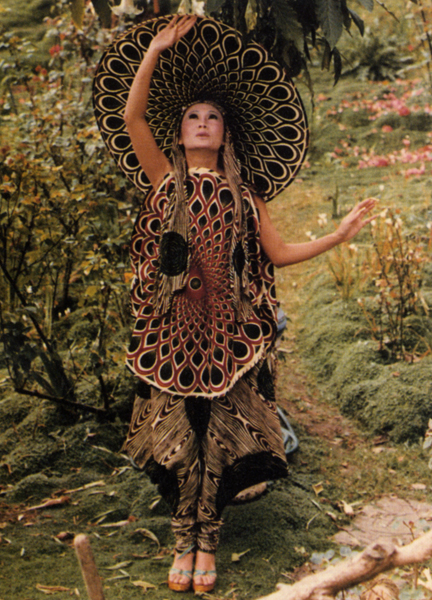
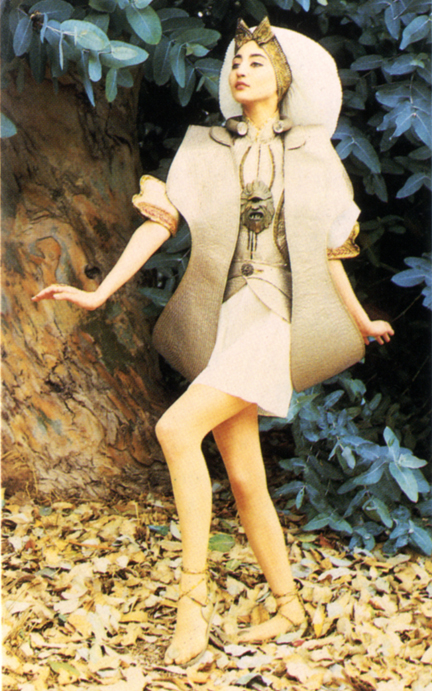
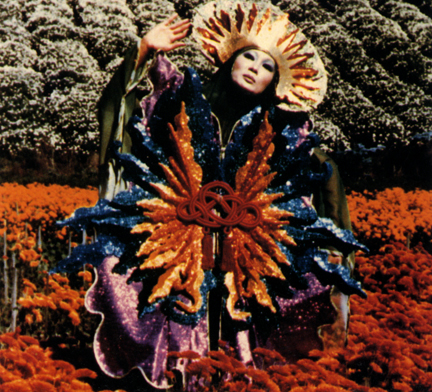
It was Feraud’s last attempt to maintain its clout as a purveyor of directional fashion. But rather than devote the marketing and design resources to re-establish the name, Feraud’s new owners opted to close the couture and let their dubious Artistic director, Yvan Mispelaere, leave and be replaced by a less conceptual and more bottom line driven Jean Paul Knott.
You may have heard the news that Diane Von Furstenberg has appointed Yvan Mispelaere to take over the Nathan Jenden’s position as creative director. If you aren’t familiar with Mispelaere’s name then you surely are with his work — he has been designing behind the scenes at Chloe beside Phoebe Philo and more recently at Gucci with Frida Gianinni. Mispelaere’s knack for transforming banal feminine clichés into directional and sophisticated designs with a broad age appeal should open an invigorating chapter for Furstenberg’s “eclectic” woman-child.
The world of tomorrow has forever provoked the human imagination, prospects of the future steering our dreams toward the unknown and unimaginable. Every era conceives their own version of what’s to come, but more often than not their efforts are no more than a telling read on the needs and dreams of their present. The Paris menswear collections for Fall/Winter 2010 announced a severely futurist mission in both references to past expectations of the future as well as truly directional ideas. It is the reconciling of the two that have made this season one of the most daring and convincing.
Early reads on Prada’s recent menswear collection may have mistakenly attributed the references to the early 70’s, but as the music selection hints at (including a sample of Opus III’s It’s A Fine Day), it could in fact be the early 90’s interpretation of that era — when the colors, prints, and flared proportions of psychedelic culture informed the cyberpunk, hyper real, and turbid 90’s. Think Dee Lite.
Nueve Musas has learned with much regret that Belgian designer Bruno Pieters will be closing his 9 year old label. Selections from his archive can be purchased here.
Chanel makes a costume change while in conversation with Ms. Carmel Snow
By 1947 Chanel found herself lost on the Paris radar, not merely because she was a suspect of Nazi collaboration, or that she had closed her business at the onset of the war, but because Dior’s New Look and Balenciaga’s OCD tailoring had made her simple and easy aesthetic démodé. Her comeback in 1953 was panned by an audience inundated with neurotic and exorbitant seasonal shifts in silhouette and hemlines, for them her clothes were anachronistic and that was the greatest bane to people desperately trying to outpace the past. Yet by the end of the decade, when fashion would address modernism for the first time since Chanel had introduced the idea in the teen’s, her look had caught on and it was Chanel’s post war designs that would go on to define the dress (not fashions) of the next two decades as it had 40 years before.
Clad in designs by Irene, Marlene Dietrich is cast as Jamilla, the wife of the Grand Vizier and the trophy of the charlatan Hafiz in the 1944 film Kismet. Wearing costumes that more closely resemble the suggestive undergarments of the 1940’s than actual ancient Arabic dress, the above scene establishes the basic style and form for aspirations of Hollywood glamour, grandeur, and beauty as expressed through a contemporary dance called “Voguing”…
Body transmogrification has always seemed to be a key agenda in dress when you look at the obscene and unruly fashions that pushed in, rusched up, expanded, inflated, deflated, and obscured human anatomy over past centuries. But in the 90’s it hit a breaking point, after the oversized figures of the 80’s the new decade saw an honest look at the body favoring a neatly exposed atheltic physique. Thierry Mugler’s fantasy aesthetic which often borders on the groteseque approached this historical tradition with the skill of a surgeon and the clarity in form of a sculptor — distorting the figure so seductively and elegantly, working with and creating new biologicial contours. It’s a method that would later become the M.O. of Alexander McQueen and Rick Owens.
In ten years customers won’t even realize Perry Ellis was a even a real person.
- Caroylyn Gotfried speaking on the future of Perry Ellis after the designer’s death in 1986
The beach was a popular campaign background used to communicate Ellis’ preference for the natural when it came to his licenses. Perry Ellis International was the branch that oversaw licensing and was ran by Ellis’ lover Laughlin Barker. This mode of business wasn’t a new idea but one wholeheartedly embraced by American designers — licensing out one’s name to a tie, shirting, coating, or shoe manufacturer and collecting a percentage of sales without having to run the actual business.
The problem with licenses is that without focused direction the product eventually becomes generic, gaining distinction (if any) from the name stitched on the label and not its actual design. Fairbrooke, a company specializing in outerwear, did both Calvin Klein and Perry Ellis’s coats. This becomes an issue when the product ranges begin to look the same and as Gottfried so elequently states, the market can no longer remember if a storied designer had even exisited.